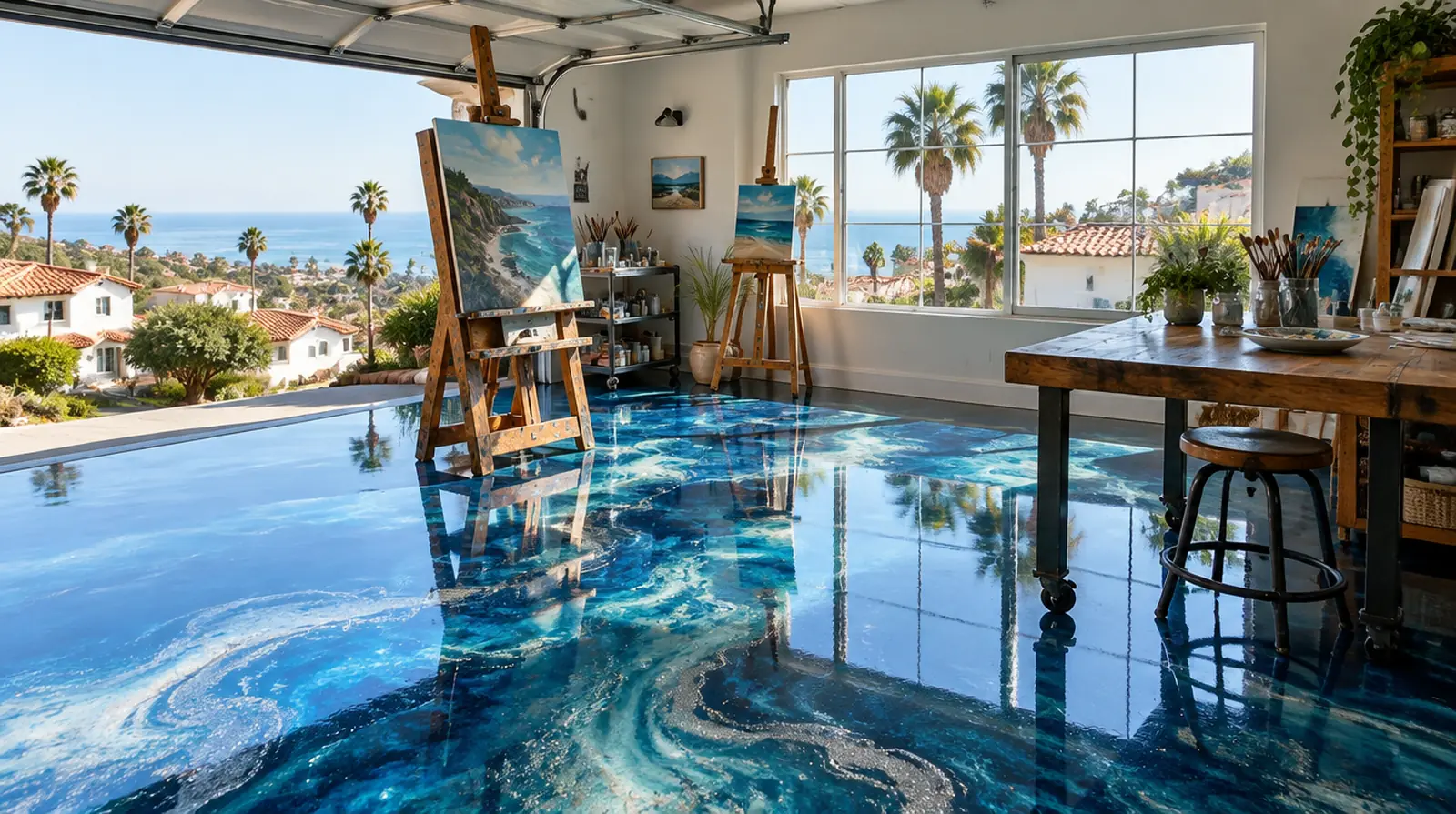
A floor that looks like water
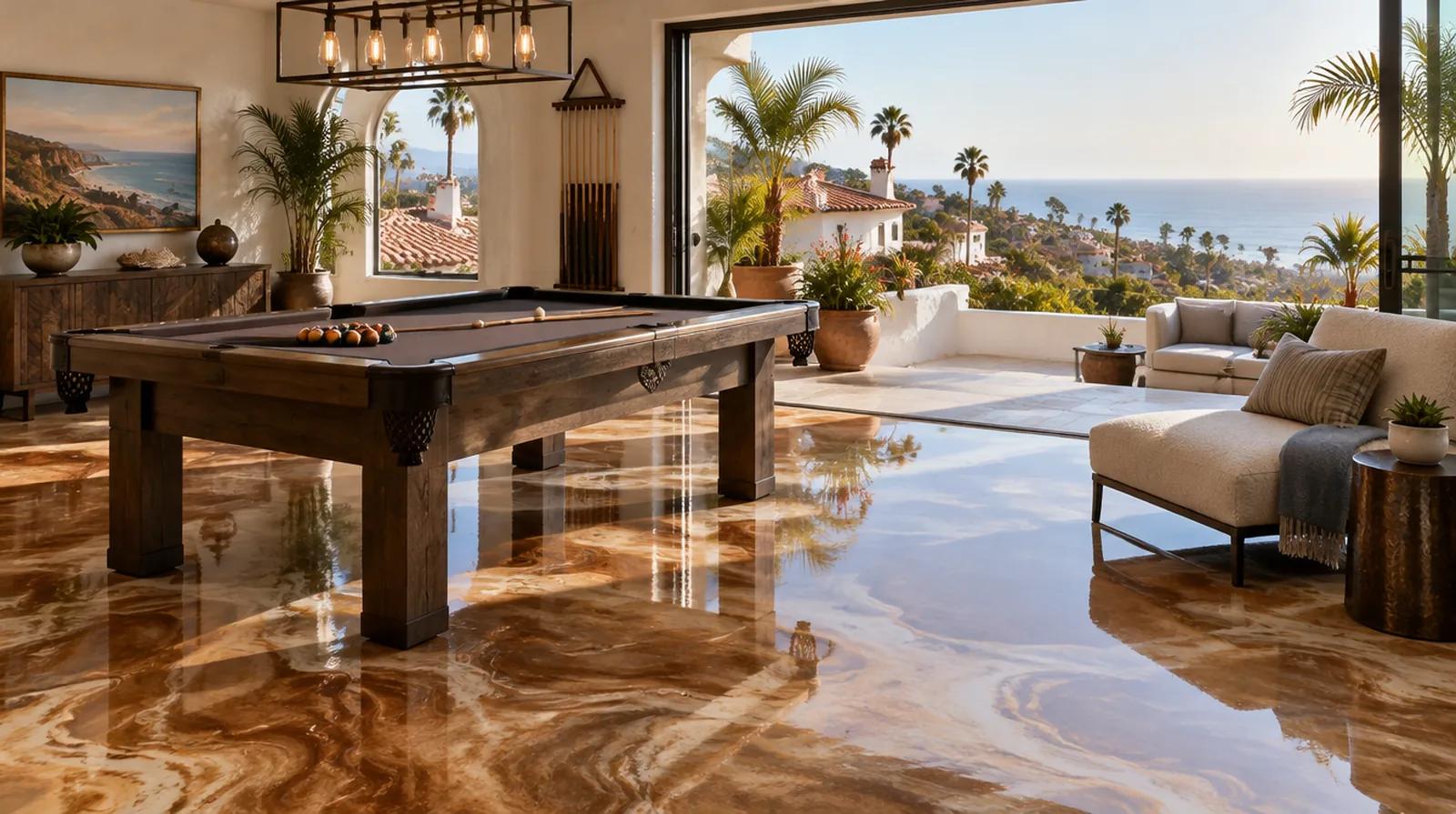
Metallic epoxy uses fine metallic pigments mixed into a clear resin. As we spread and work the resin, those pigments move and settle, forming swirls, ripples and soft clouds that catch the light. No two floors are the same. In a coastal town, many customers choose colors that echo the ocean: deep blues, teals, silvers and sea-glass greens. Others go with warm bronze, copper and sand tones that suit Spanish-style interiors.
Where it works best
- Converted garages and bonus rooms
- Home gyms and yoga rooms
- Art studios and creative spaces
- Retail shops and salons
- Showrooms and office lobbies
- Wine rooms and home bars
For a working garage where cars come and go every day, we usually suggest a flake floor instead. Metallic floors are tough, but a glossy surface shows scratches and sand more than a textured one.
How we install it
- Grind and repair. The slab must be flat and clean, since a glossy floor shows every dip.
- Moisture test and prime. On coastal slabs this step is critical. We use a vapor-blocking primer when needed.
- Base coat. A tinted base sets the background color.
- Metallic layer. We pour and manipulate the metallic resin to create the pattern you want.
- Topcoat. A clear, UV-stable topcoat protects the design and adds scratch resistance.
Planning your design
We start with your room. What colors are on the walls and cabinets? How much daylight comes in? Do you want something calm or something bold? We show you sample boards and photos of past floors so you can choose a color family and a style of movement, from soft and cloudy to strong and marbled. We can also add a second or third color for more depth.
Sunlight and coastal homes
Many converted garages and studios here have big windows or doors that open to the patio. Strong afternoon light can fade or yellow some coatings over time. We always finish metallic floors with a UV-stable topcoat, and we may suggest window film for rooms that get a lot of direct sun.
Slip resistance
A metallic floor is glossy by nature, but we can add a clear grit to the topcoat for better traction. For gyms and rooms that might get wet feet, we recommend it. The grit is barely visible and does not hide the design.
Taking care of it
Use a soft dust mop to remove sand and dust, since grit is what dulls a glossy surface. Mop with warm water and a pH-neutral cleaner. Put felt pads on furniture legs and use mats at doors. Avoid dragging heavy items across the floor.
Questions
How long does it take?
Usually two to three days, including prep and cure time between coats.
Can it go on a second-story floor?
Metallic epoxy needs a concrete or properly prepared base. We look at each space individually.
Will it look exactly like the sample?
It will be in the same family, but every floor is unique. That is part of the appeal.
Want matching counters? Ask about our epoxy countertops. Book a free consultation to start planning your floor.
Matching the floor to the room
A metallic floor in a converted garage or studio should feel like it belongs to the house. We look at wall colors, cabinets, trim and furniture before suggesting pigments. Cool blues and silvers work well with white walls and natural wood, while warm bronze and sand tones suit the terracotta and cream palettes found in many Spanish-style homes. We can also carry the same finish onto a bar top so the room feels connected.
Metallic floors also work well in small commercial spaces like salons, boutiques and tasting rooms, where a striking floor helps the room stand out. We can work after hours so your business stays open, and we plan the cure schedule so the space is ready when you need it. Ask to see photos of past commercial metallic floors at your estimate.
Plan your metallic floor
Call (949) 429-4155 for a free estimate.